
- Cet évènement est passé.
THE BOOK OF BOOKS: HERNANDO COLÓN’S LIBRO DE LOS EPÍTOMES
19 mars 2026 · 9h00 – 17h00
Lieu :
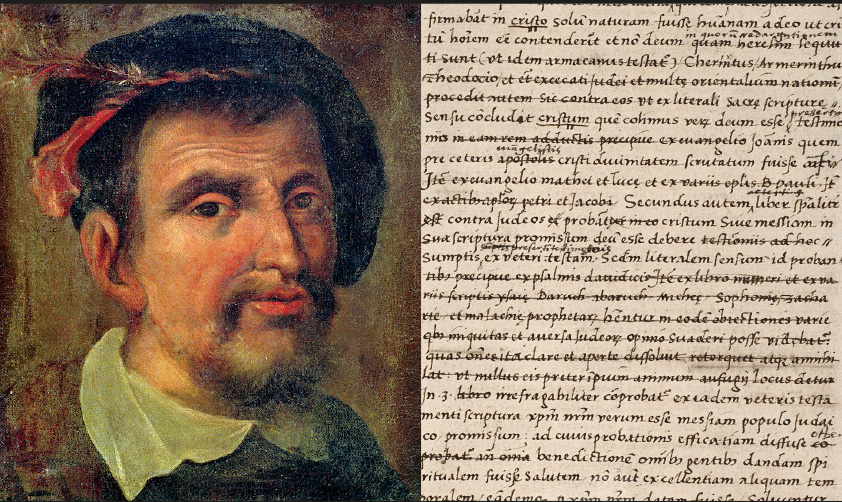
In the early 16 th century, Hernando Colón, son of the navigator Christopher Columbus, set out to build a universal library, one which would contain “every book on every subject in every language, both from within Christendom and without”. By the time of his death in 1539, Colón’s library comprised over 15 000 printed volumes. To manage it all he designed a revolutionary system of cross-referenced inventories or catalogues. Most of these survive in the Biblioteca Colombina in Seville, but one, the “Libro de los epitomes”, containing summaries of the contents of the books, had been presumed missing until identified in 2018 among the manuscripts in the Arnamagnæan Collection in Copenhagen. The discovery, hailed as one of the most exciting developments in early modern book history for decades, led to the establishment of a research project, funded by the Carlsberg Foundation and a private donor.
The chief deliverables of the project, which ran from 2020 to the end of 2024, were a digital transcription of the “Libro de los epitomes”, made in TEI-conformant XML, along with studies dealing with the form and contents of the “Libro”, including the identification of the books summarised in it, an analysis of the language and style of the epitomes as well as their underlying strategies of composition, and an investigation into Colón’s universal library project within the broader currents of Hispano-Danish relations in the early modern period. An ancillary project traced the dispersal of books from Colón’s Library
following his death, paving the way for a virtual reconstruction of the library.
Au début du XVIe siècle, Hernando Colón, fils du navigateur Christophe Colomb, entreprit de créer une bibliothèque universelle qui contiendrait « tous les livres sur tous les sujets dans toutes les langues, tant à l’intérieur qu’à l’extérieur de la chrétienté ». À sa mort en 1539, la bibliothèque de Colón comptait plus de 15 000 volumes imprimés. Pour gérer tout cela, il a conçu un système révolutionnaire d’inventaires ou de catalogues croisés. La plupart d’entre eux ont été conservés à la Biblioteca Colombina de Séville, mais l’un d’entre eux, le « Libro de los epítomes », contenant des résumés du contenu des livres, était présumé perdu jusqu’à ce qu’il soit identifié en 2018 parmi les manuscrits de la collection Arnamagnæan à Copenhague. Cette découverte, saluée comme l’une des plus passionnantes de l’histoire du livre moderne depuis des décennies, a conduit à la mise en place d’un projet de recherche, financé par la Fondation Carlsberg et un donateur privé.
Les principaux résultats du projet, qui s’est déroulé de 2020 à fin 2024, ont consisté en une transcription numérique du « Libro de los epítomes » réalisée en XML TEI ainsi que des études portant sur la forme et le contenu du « Libro », notamment l’identification des livres qui y sont résumés, une analyse de la langue et du style des épitomés ainsi que des stratégies de composition qui les sous-tendent et enfin, une enquête sur le projet de bibliothèque universelle de Colón dans le contexte plus large des relations hispano-danoises, au début de l’époque moderne. Un projet annexe a retracé la dispersion des livres de la bibliothèque de Colomb après sa mort, ouvrant la voie à une reconstruction virtuelle de la bibliothèque.